🏢 TechBridge Solutions - Full Salesforce Org Build
The Problem: TechBridge had no structured sales process, no onboarding automation, and no support tier system. Every deal moved through informal steps, every new client required manual setup, and support volume had no triage layer.
🌟TechBridge Solutions is a mid-market B2B SaaS company with a growing sales team, no structured pipeline process, and rising support overhead. I designed and built a full Salesforce org to solve all three—from first lead to post-sale AI support.
Outcome
Governed, Scalable Org
Every user sees exactly what their role requires, and the architecture scales to 500 users without manual record management.
Autonomous Tier 1 Support
Lama resolves common requests end-to-end and hands off complex cases with full context already documented.
Zero-Touch Onboarding
What used to take 2-3 hours of manual CS setup now happens automatically the moment a deal closes.
Details
⚙️ Org Setup & Configuration
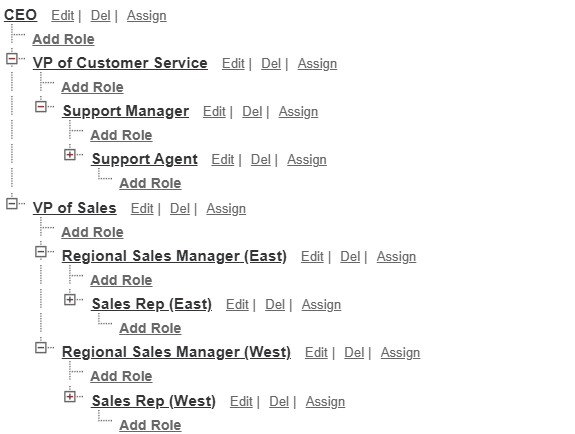
Sales reps and support agents shouldn't see each other's data, and as the team grows, that shouldn't require manual record sharing. I built a role-based security model that enforces visibility automatically at every level.
💵 Lead-to-Close Sales Process
Enterprise and SMB leads were hitting the same queue with no routing logic, and reps had no structured discovery process before creating Opportunities.
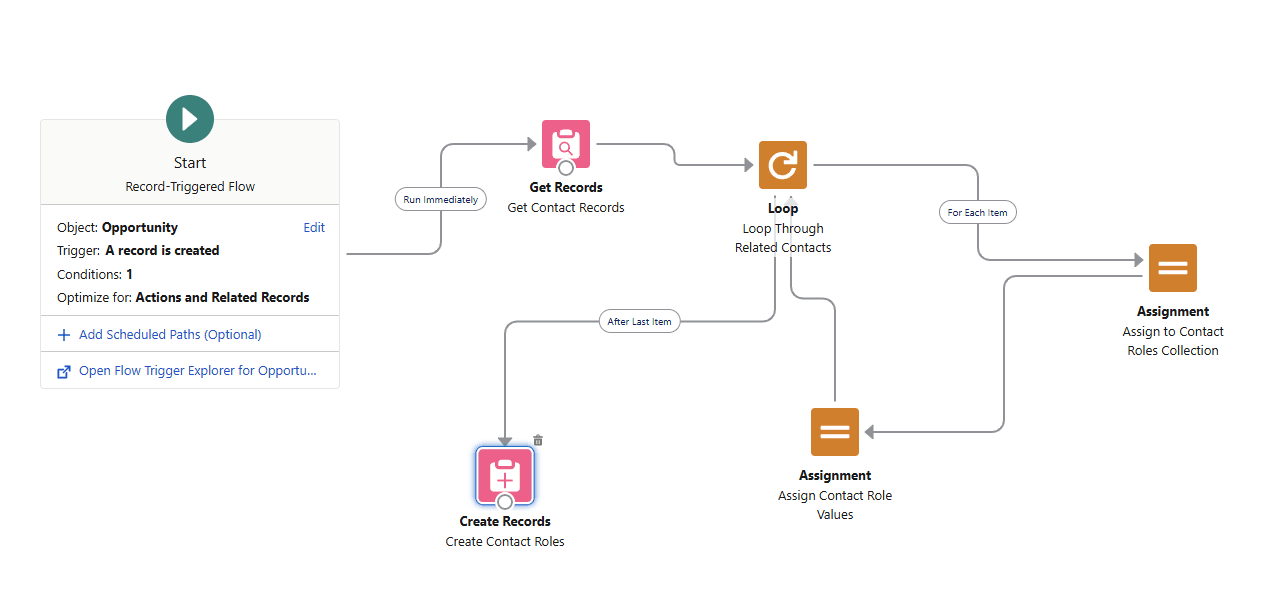
Reps were converting Leads without complete data, and deals were stalling with no stage guidance. I redesigned the full B2B sales cycle to enforce data quality at entry and guide reps through each stage, including auto-assigning Decision Maker roles to VP and Director-level contacts.
* Full B2B SaaS sales cycle: custom Lead fields for company size and ARR estimates, validation rules blocking conversion without contact data, Lead Assignment Rules routing Enterprise vs Standard leads to separate queues, and a 7-stage Opportunity process with Path and Guidance for Success. A Screen Flow walks reps through a structured discovery form before an Opportunity is created, and a Record-Triggered Flow automatically sets Contact Roles for VP and Director-level contacts.
🚀 Automated Client Onboarding
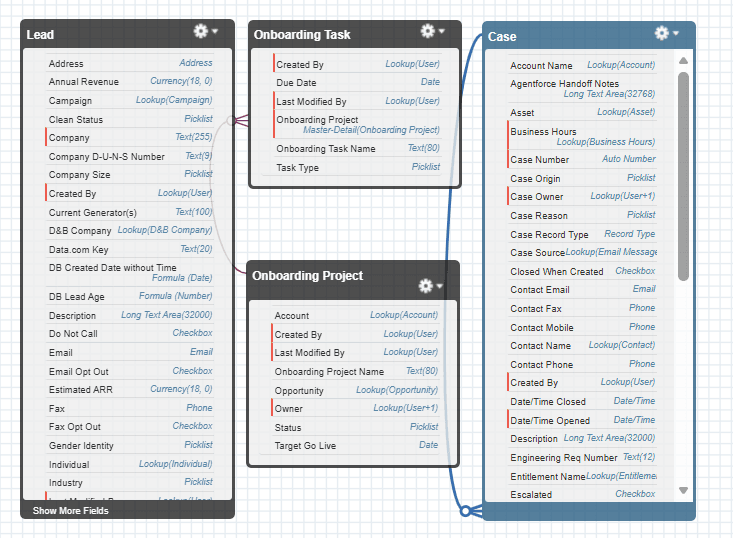
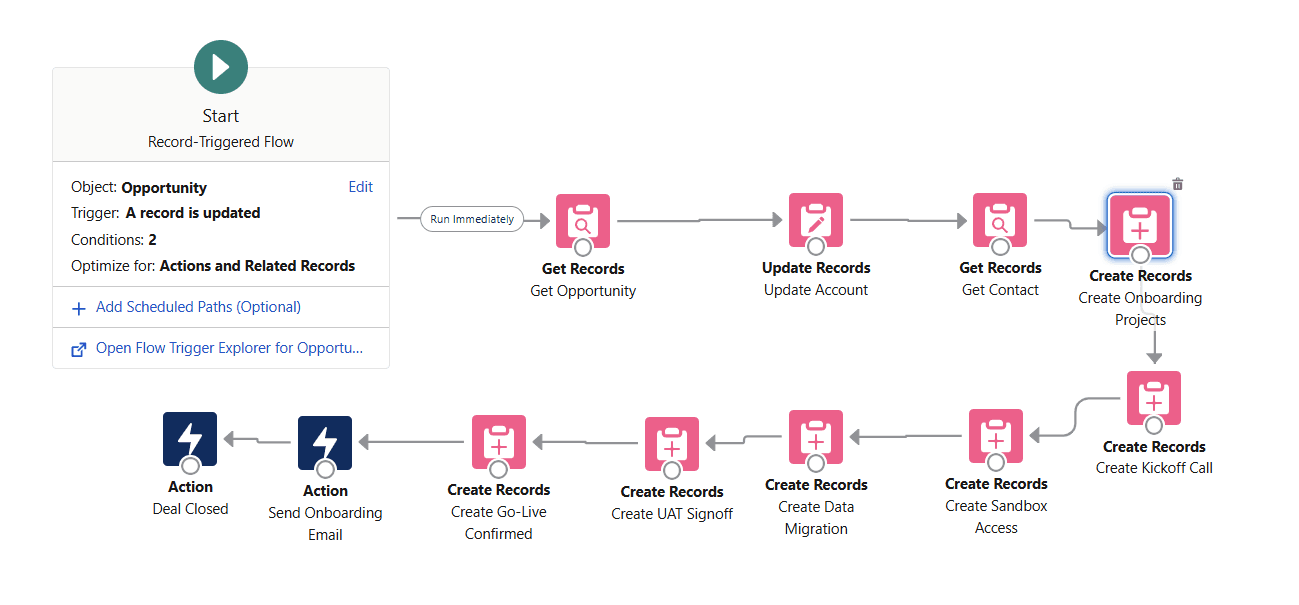
Closing a deal used to mean hours of manual setup. Now a multi-step Record-Triggered Flow orchestrates the entire onboarding sequence without any human intervention: updating the Account status, creating an Onboarding Project record with a 30-day go-live target, generating five sequenced Onboarding Task records assigned to the CS team queue, sending a templated welcome email to the primary contact, and posting a Chatter notification tagging the Customer Success Manager.
🎧 Service Cloud & SLA Enforcement
Enterprise and Standard customers have different support expectations, and missing SLAs damages renewals. I built a two-tier SLA model that enforces differentiated response targets, auto-escalates stale cases, and deflects common questions before a ticket is ever submitted.
Built a full Service Cloud operation with a 6-stage support process, Case Assignment Rules routing by product type to Enterprise and General queues, and Escalation Rules auto-escalating cases stale for 48 hours. Configured Entitlements and Milestones enforcing differentiated SLAs: Enterprise customers get First Response in 4 hours and Resolution in 24 hours; Standard customers get 8 and 72 hours respectively—with milestone violation alerts to the Support Manager. A Case Deflection Screen Flow surfaces Knowledge articles before a case is submitted, reducing unnecessary ticket volume.
🤖 Agentforce AI Support Agent
Tier 1 support: case status checks, billing questions, basic account inquiries—consumed a disproportionate share of agent time.
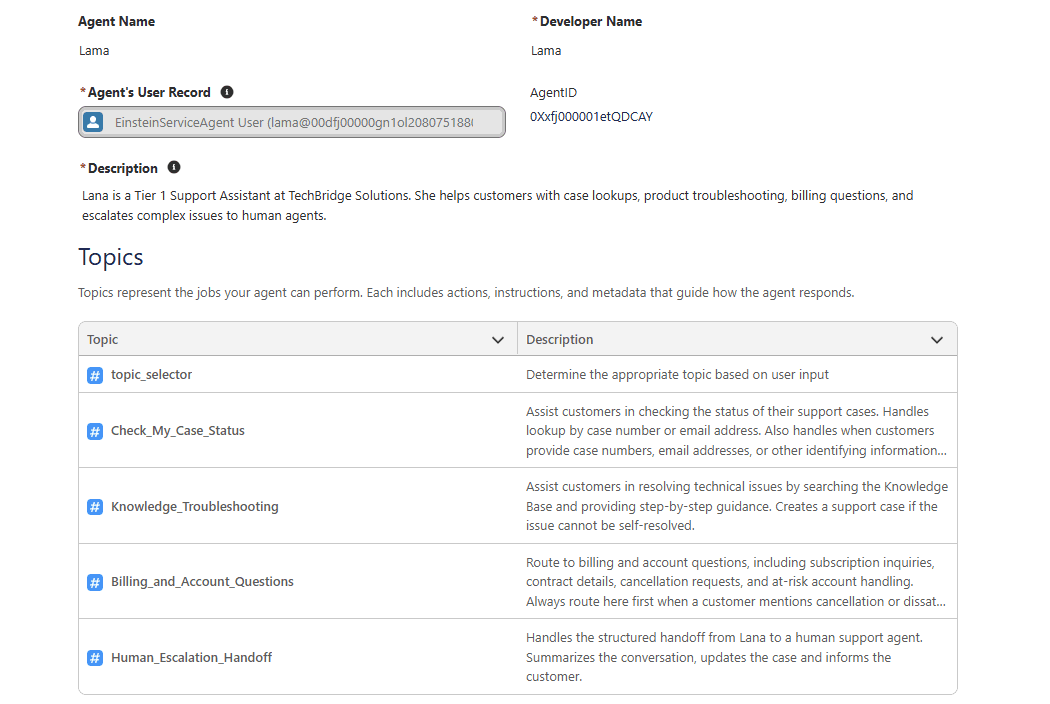
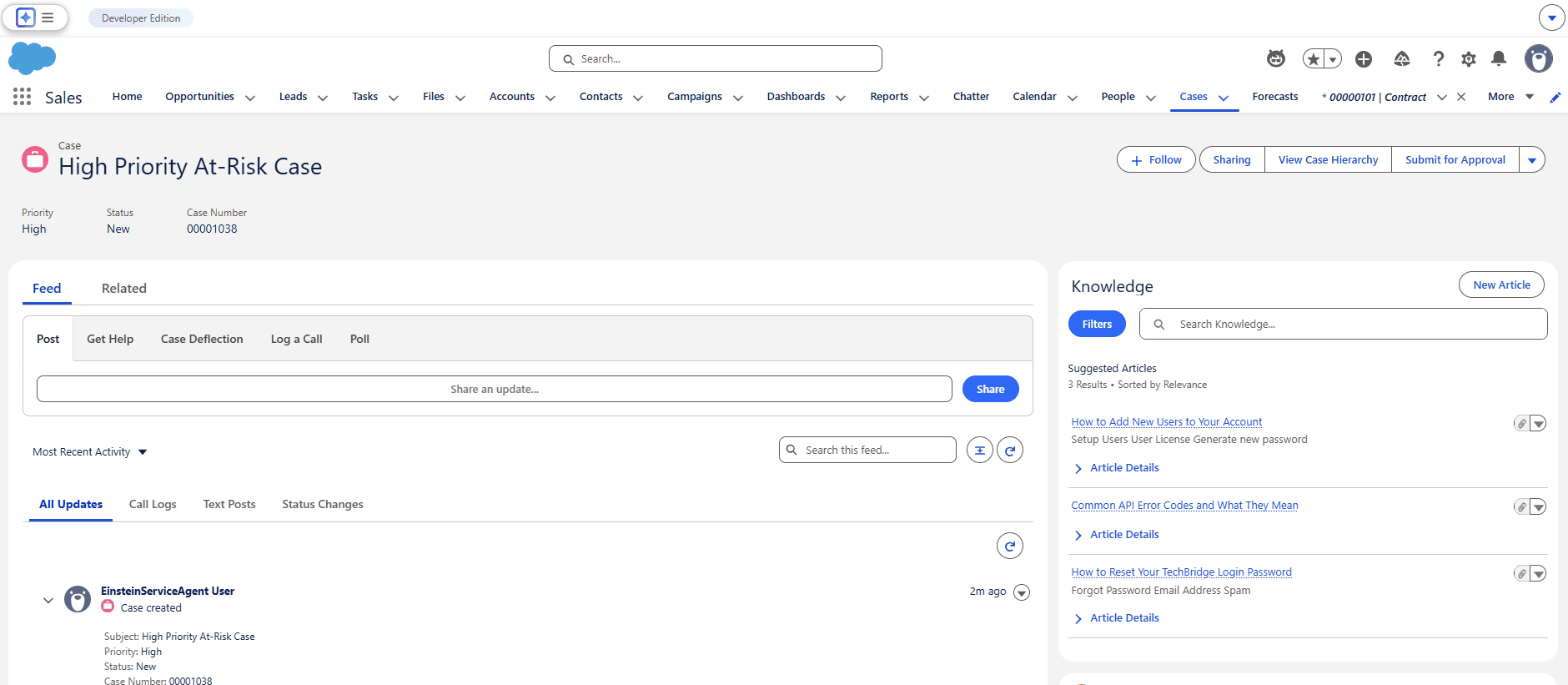
Lama is TechBridge's autonomous Tier 1 support assistant, built from scratch using AgentScript YAML and seven custom Autolaunched Flows as Agent Actions. She handles three topics: Case Status Lookup, Billing and Account Questions, and Human Escalation Handoff, using multi-topic reasoning, typed global session variables, and explicit action sequencing. When a customer signals cancellation, Lama creates a high-priority At-Risk case and notifies the customer that their success manager will follow up. Escalations trigger a structured handoff: Lama generates a summary, updates the case to Escalated and confirms the handoff to the customer—all without human involvement. Deployed on Experience Cloud via Embedded Messaging.
Reflection
This is by far the most complex project I've done so far. It taught me to think in systems rather than features, how to configure different features of Salesforce and how to combine them into a running, scalable system.
The most challenging part about this project is definitely building the Support Agent with Agent Builder. This is the first time I get to configure an agent from scratch to truly understand how it functions. I ran into Salesforce's schema caching behavior where output variables added to an existing flow aren't reflected in an already-deployed Agent Action, and learned to work around it by cloning flows and creating new actions. I also ran into some issues while working with Agentforce in my Free Developer Edition as I was unable to make my Agent to notify an account's contact via Chatter due to licensing constraints.