💡 Intelligent Partner Lifecycle Optimizer
The Problem: Vendor onboarding was handled through manual back-and-forth emails, performance had no consistent measurement system, and underperforming partners received no structured guidance, leaving the partner network operating without visibility or accountability.
My Approach
Before building anything, I mapped the three people who would use this system every day.
User Story: The Partner Manager
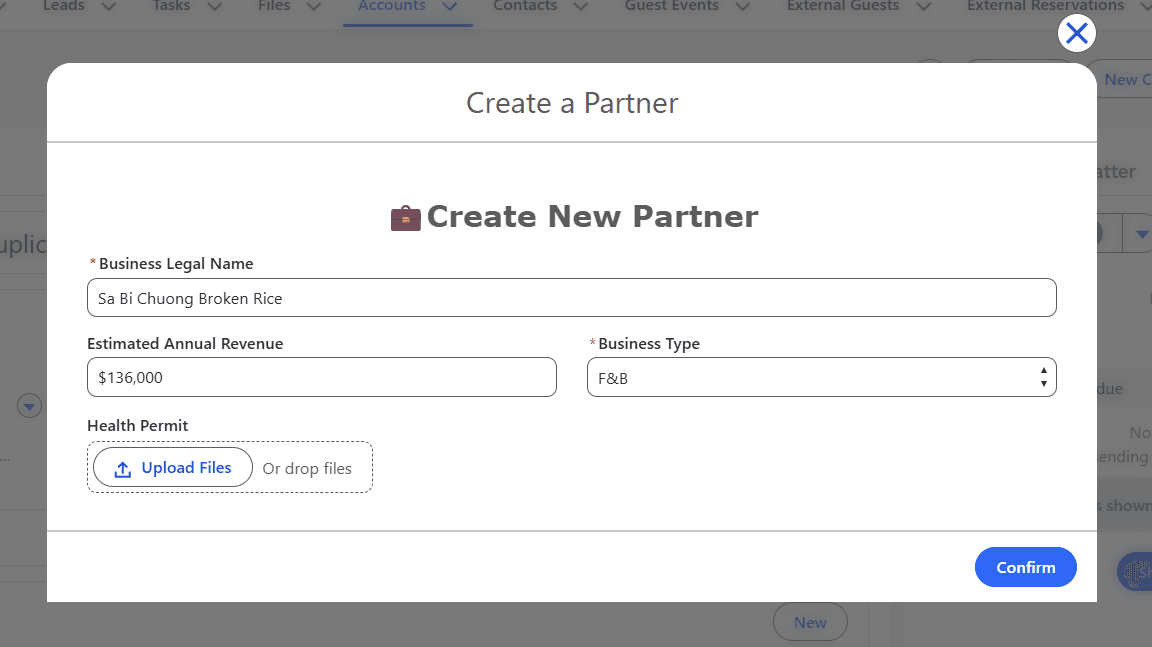
"As a Partner Manager, I want a guided onboarding wizard so that I can collect all necessary vendor documents (Legal Name, Estimated Annual Revenue, Business Type) without manual back-and-forth emails."
User Story: The Executive Analyst
"As an Executive, I want to see real-time onboarding metrics so that I can identify which type of business in Vietnam are growing the fastest and where we have bottlenecks."
User Story: The Vendor
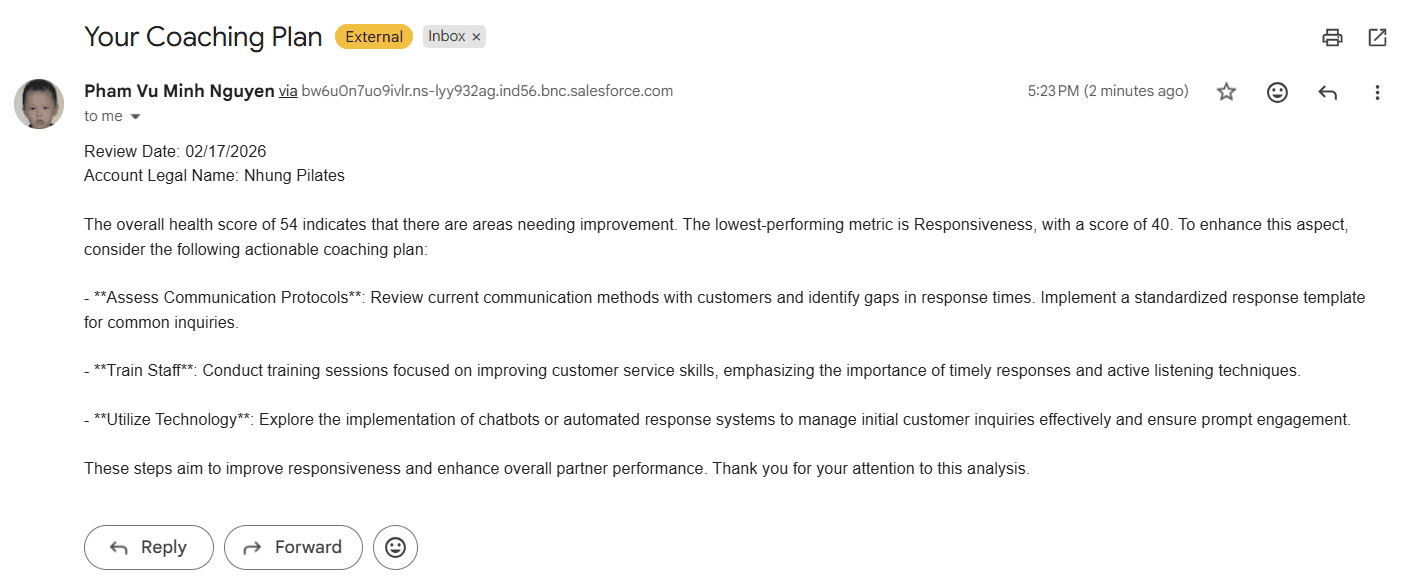
"As a vendor, I want to understand specifically why my Health Score is low and what I should do about it, not just receive a generic performance warning."
🌟For a premium e-commerce platform, managing a growing vendor network and partner onboarding was a manual, email-heavy process—and underperforming vendors had no structured path to improve. This solution automates onboarding from first form to live account, and uses AI-generated coaching plans to turn performance data into concrete vendor guidance.
Outcome
Friction-Free Onboarding
Partner Managers go from email chaos to a single structured wizard, onboarding time cut by ~50%, with zero missing required fields at submission
AI-Powered Improvement Plans
Underperforming vendors receive specific, data-driven coaching within the same workflow, replacing the manual work of writing individual feedback
Executive Visibility
Leadership can see in real time which business sectors are thriving or struggling across the partner network, without waiting for manual reports
Features
💼 Automated Onboarding & Quantifiable Performance Metrics (KPIs)
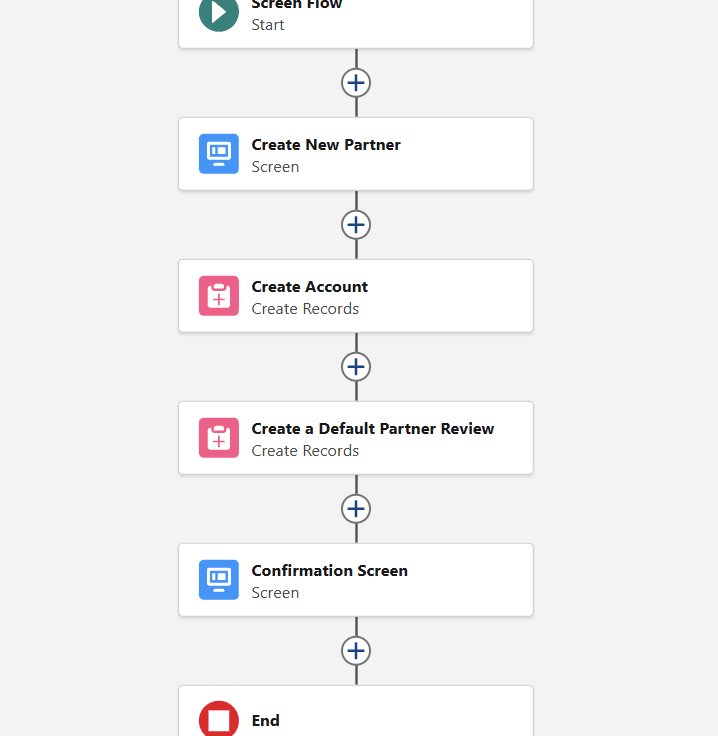
New vendor onboarding used to require a Partner Manager to collect documents through emails, manually create records, and follow up for missing data. The onboarding Flow replaces that entirely: guiding managers through a single structured wizard that validates all required fields and creates both the Account and Partner Review record simultaneously. No manual record creation. No back-and-forth.
🤖 AI-Driven Coaching Plan
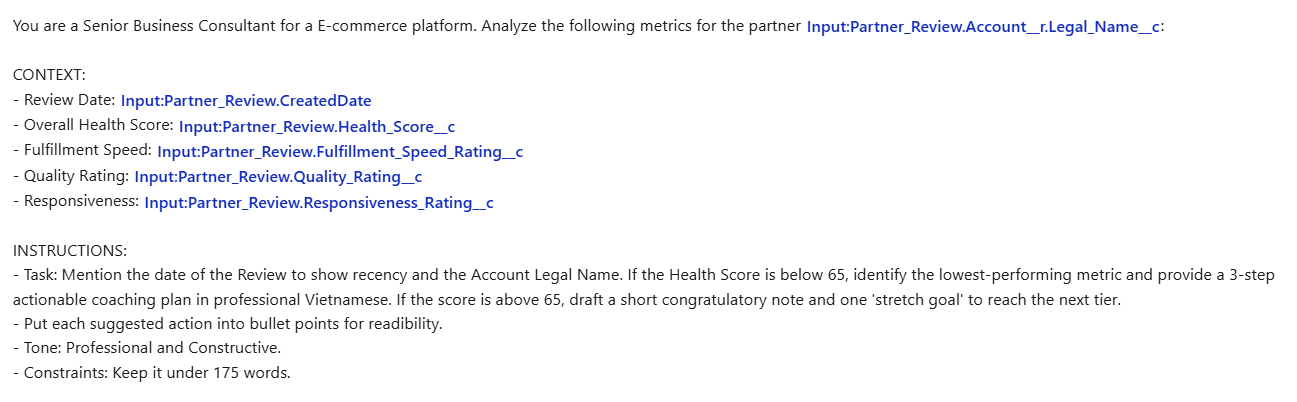
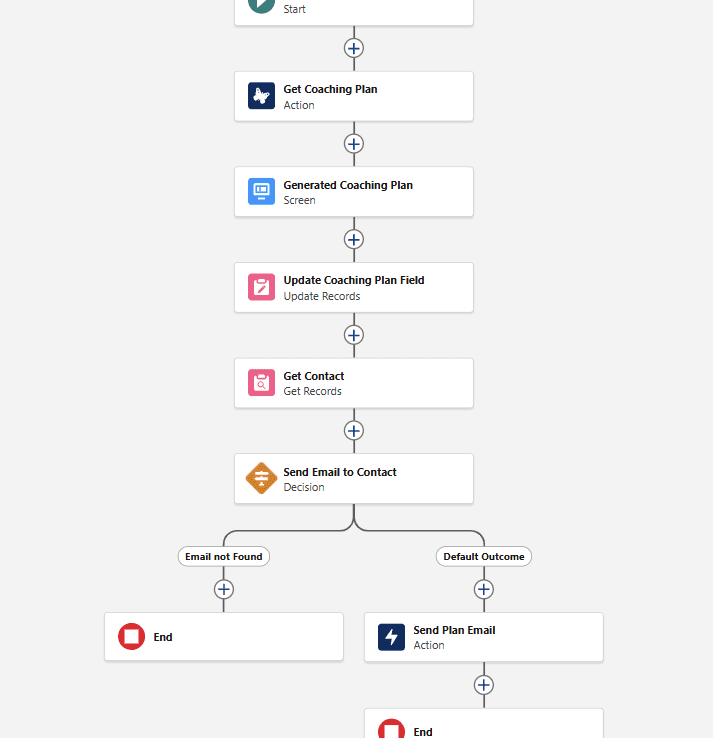
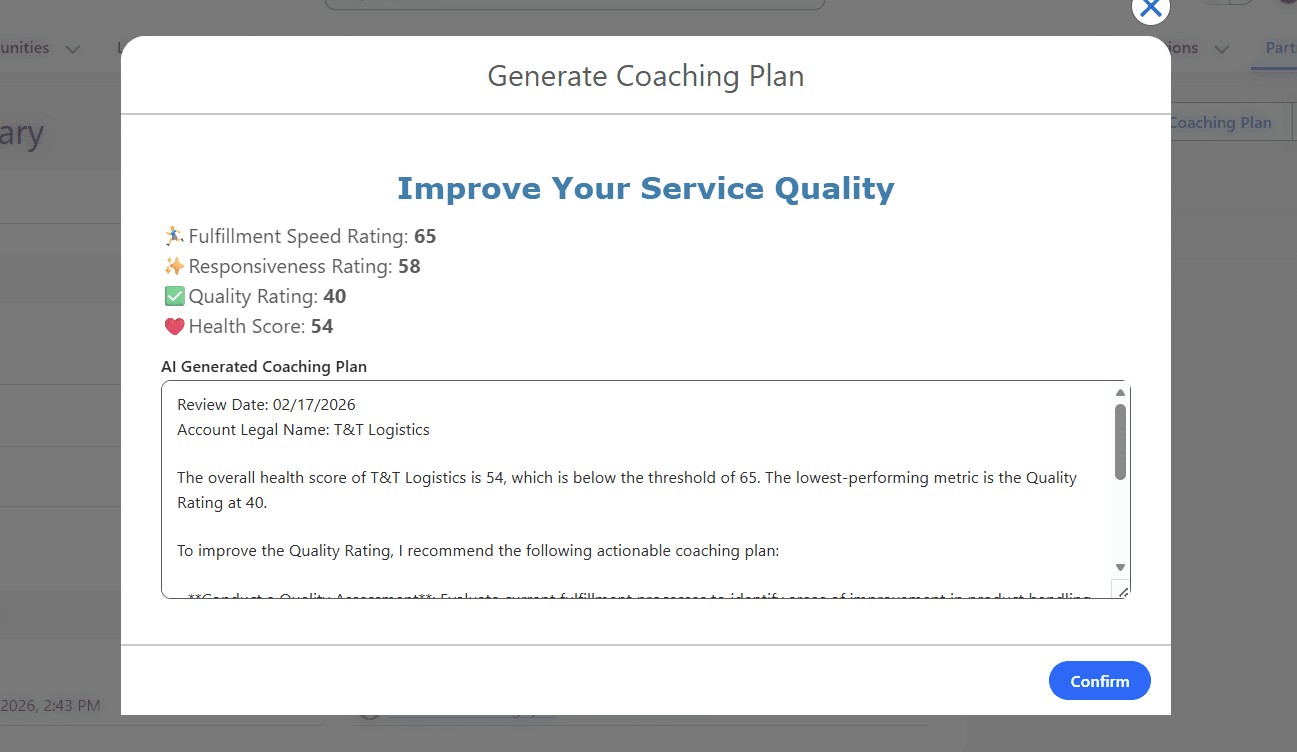
Einstein Prompt Builder analyzes specific metric deficits per vendor and generates bespoke coaching plans, including vendors seeking a higher service tier. A Human-in-the-Loop interface lets managers review and finalize AI suggestions before auto-dispatch via email.
The Human-in-the-Loop review step was a deliberate architectural choice, not just a safety net. It ensures managers retain accountability for vendor relationships while AI handles the analysis work. Coaching plans are generated in seconds; managers spend their time reviewing and approving, not writing from scratch.
📊 Service Quality Dashboards
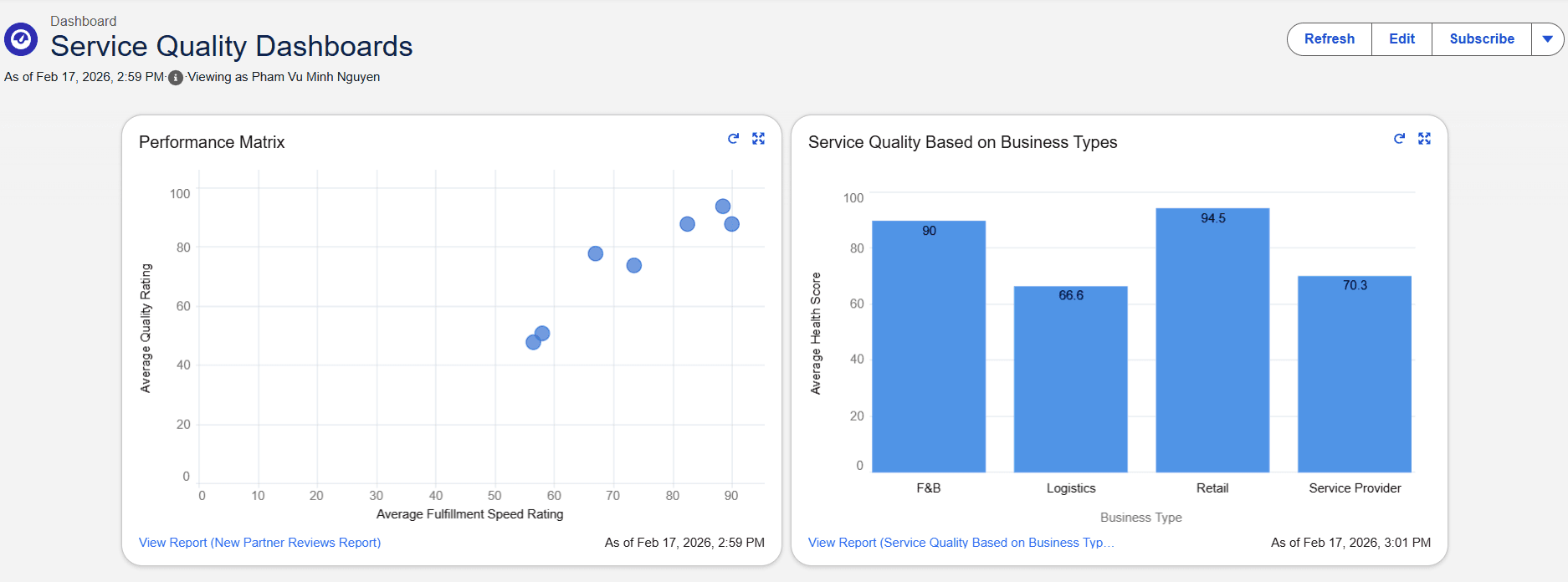
I translated complex relational datasets into a Service Quality Command Center to drive strategic decision-making:
- Performance Matrix (Scatter Chart): Displaying individual vendor based on fulfillment speed and quality ratings to identify "High-Velocity Champions" vs. "Operational Risks."
- Industry Benchmarking (Bar Chart): Displays Average Health Scores by Business Type, highlighting which sectors (e.g., F&B vs. Logistics) require systemic intervention or resource allocation.
📋 Quality Auditing
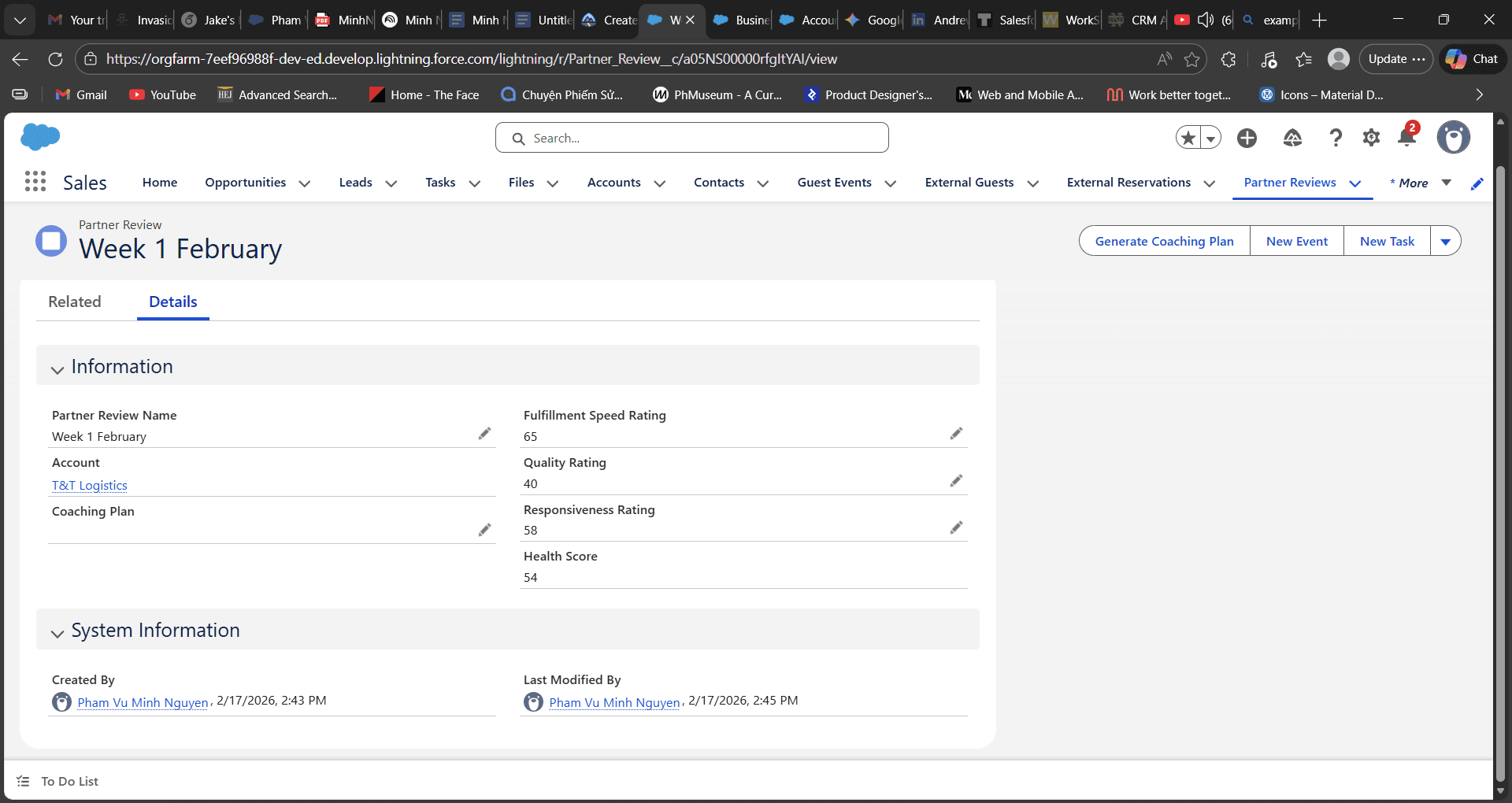
Partner Review records can be manually rated and stored by the Quality Audit Manager, or a Scheduled Flow can be configured to automate weekly performance tracking, ensuring consistent oversight without manual reminders or missed review cycles.
Reflection
This project taught me how to think beyond individual features and design a connected system—where a Screen Flow feeds data into a Health Score, which triggers an AI coaching plan, which is then validated by a human before reaching the vendor. Each component serves the next.
Using Prompt Builder to generate coaching plans pushed me to think carefully about how context is passed to an LLM and how to structure prompts that return consistent, useful output. The Human-in-the-Loop pattern was a deliberate choice to ensure AI suggestions are always verified, a principle I'll carry into future builds.
If I were to extend this project, I'd add a vendor-facing Experience Cloud portal so vendors could see their own Health Score and coaching plan directly, closing the loop between internal performance tracking and vendor-side action.